
What you actually control
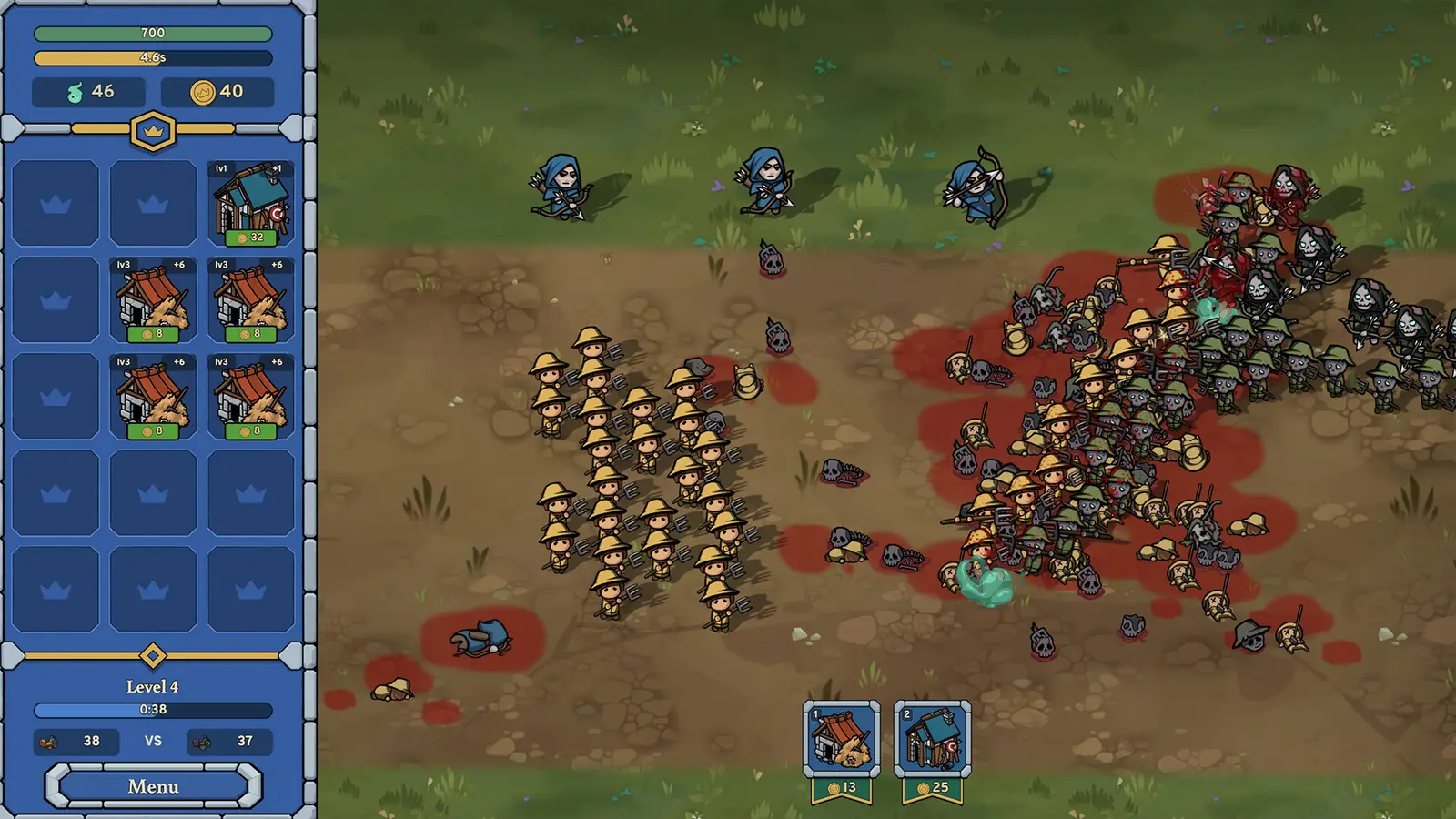
In Here Comes the Horde you are King Richard, and your only job is to spend. You buy buildings, place them on a grid behind the castle wall and upgrade them. Each building trains one kind of soldier for the rest of the level, and the fighting itself is automatic: you never steer a unit. Every real decision happens before a level starts and between waves.
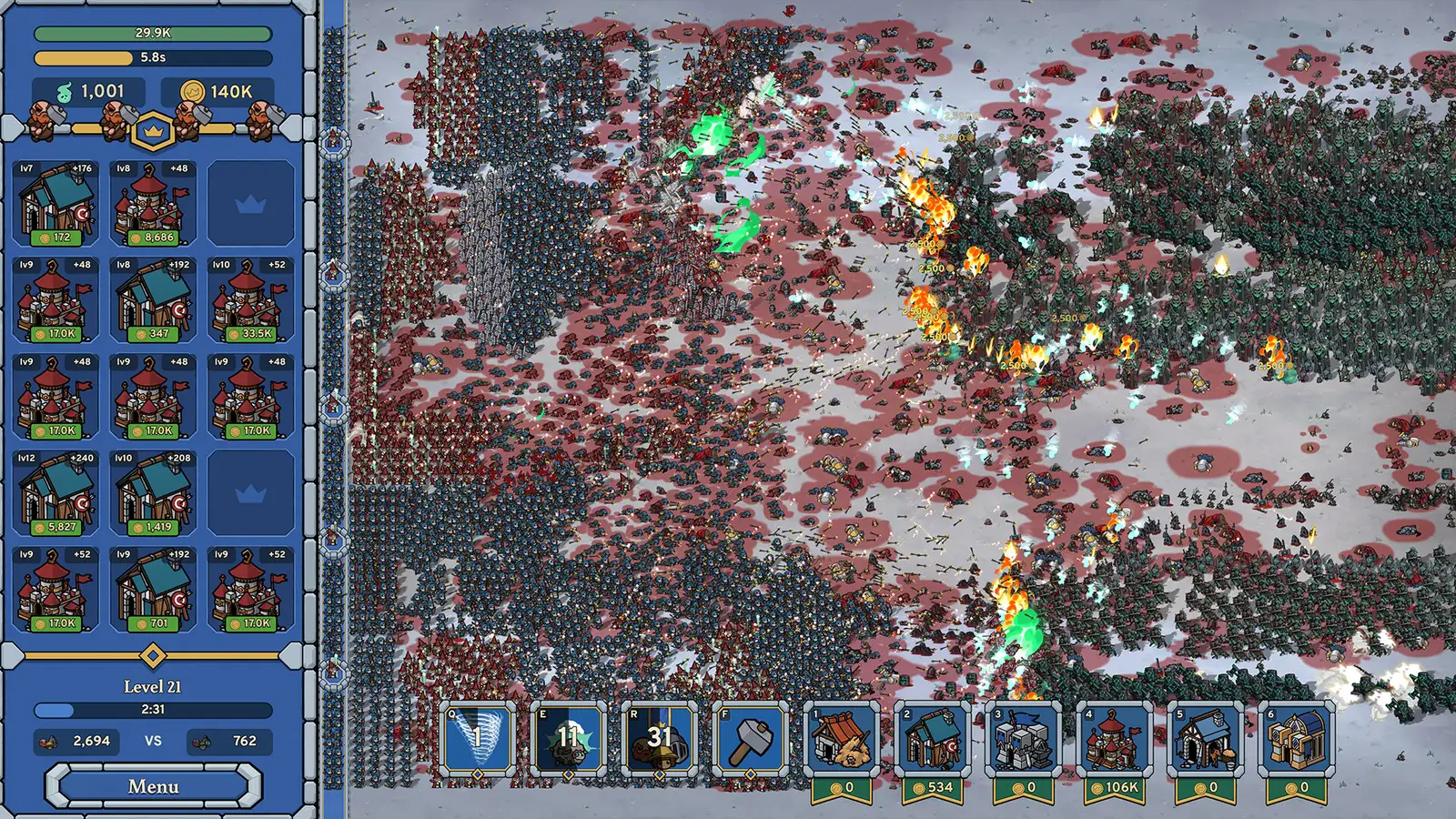
The grid is 3 columns by 5 rows, 15 slots. The talent tree unlocks building types, not more slots, so a full grid on Level 3 and a full grid on Level 28 have the same 15 squares; what changes is what you can put in them.
The seven hotkeys
Keys 1 to 7 (or the number pad) pick a building. This table is the whole control scheme as far as public sources document it.
| Key | Building | Unit it trains | When it matters |
|---|---|---|---|
| 1 | Hut | Peasants | From Level 1; cheap bodies and early gold |
| 2 | Range | Archers | Main damage through the demo levels |
| 3 | Barracks | Knights | Mid game; also unlocks Construction Workers |
| 4 | Tower | Mages | Mid to late game area damage |
| 5 | Stable | Cavalry | Late game reinforcement and charges |
| 6 | Chapel | Paladins | Late game; the Level 30 right column |
| 7 | Arcane Sanctum | Archmages | Late game; the Level 30 core |
Since update 1.1.0, T pauses the battle once you enable pause in Gameplay Settings, and you can still build and upgrade while paused. Other shortcuts shown in the game's interface are not listed in any public source, so I leave them out rather than guess.
Gold versus souls
The game has two currencies and mixing them up is the most common beginner mistake.
- Gold drops during a level and buys buildings and upgrades. It does not carry over; whatever you hold at the end of a level is gone.
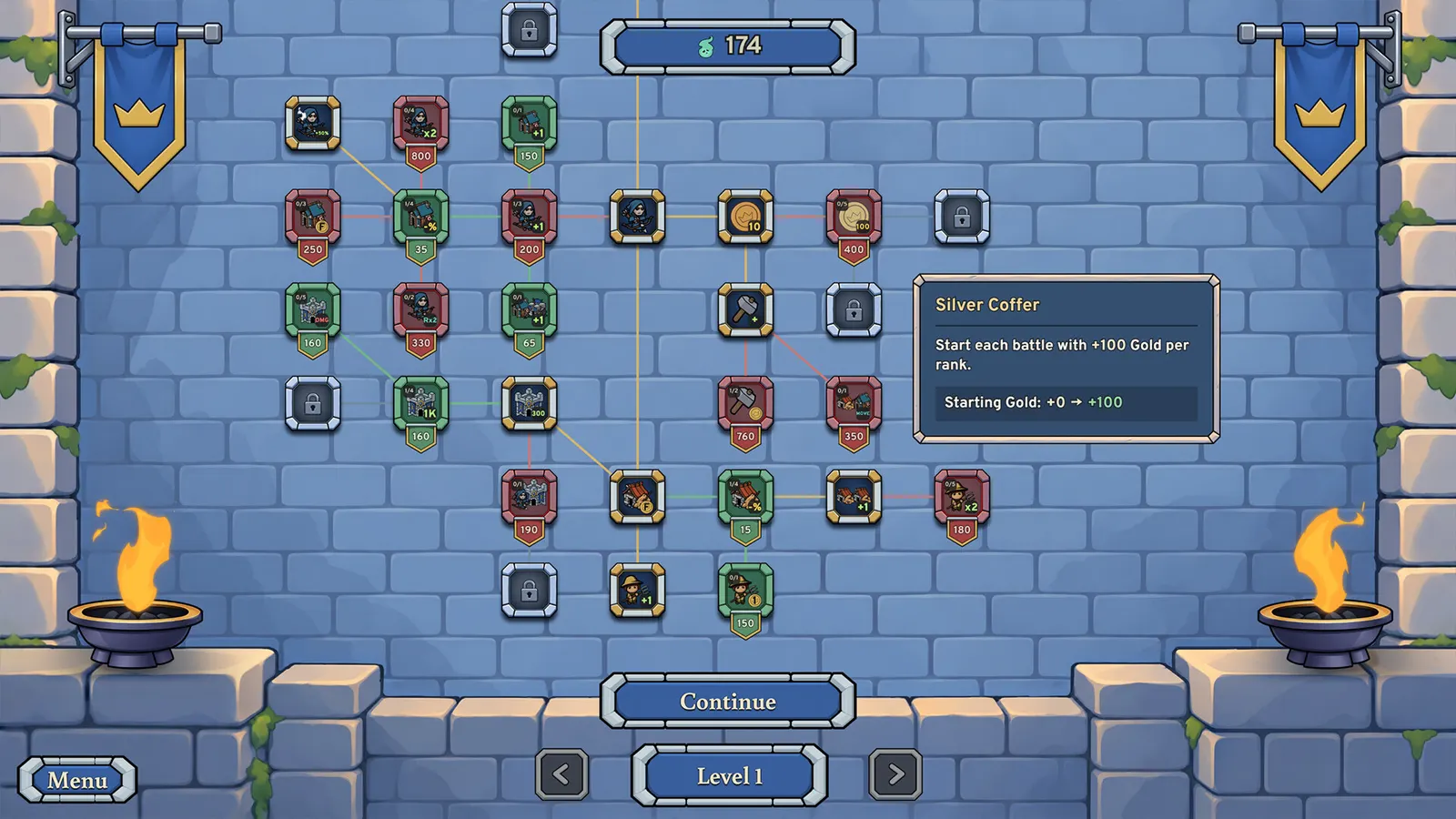
- Souls are paid out when a level ends, win or lose, and stay with you. They buy talents, which is where new building lines, stronger units and economy bonuses come from.
A lost level still pays souls. If a wave wall stops you, replaying an earlier level for souls and unlocking the next building line is normal play, not grinding for its own sake.
A build order for the first seven levels
- Open with one or two Huts. Peasants are cheap, buy time and feed the early economy.
- Add a Range as soon as you can afford it. Archers do most of the damage through the demo levels.
- Keep adding Huts and Ranges until enemies stop reaching the wall.
- Bring in a Barracks next; Knights are sturdier, and the Barracks line also unlocks Construction Workers, who upgrade buildings for free during battle.
- Leave Chapels and Arcane Sanctums for later. Spending on them before roughly Level 12 starves the economy that pays for everything else.
Five mistakes that end early runs
- Spreading souls across all seven lines. Six half-upgraded armies lose to one focused one.
- Forgetting that buildings go in the 15 slots on the left, not onto the battlefield.
- Adding more of the same unit when a level will not fall, instead of unlocking the next line.
- Ignoring pause. After 1.1.0 you can stop the clock, rebuild and resume.
- Selling buildings carelessly. Demolition refunds depend on talent ranks; check the buildings page before you rebuild a grid.
How long it takes
Polished Games describes the full game as 3–4 hours, 30 levels. Steam reviewers report anything from about 2.5 to 5 hours, and the free demo covers Levels 1–7. When you outgrow these basics, the best build guide covers the late game and the Level 30 page covers Moriana.
Video
Questions
Can I control units in Here Comes the Horde?
No. Combat is fully automatic. You decide which buildings to place in the 15 grid slots and what to upgrade; each building keeps training its unit until the level ends.
What is the difference between gold and souls?
Gold is earned and spent inside one level on buildings and upgrades and does not carry over. Souls are paid at the end of every level, win or lose, and buy permanent talents.
Is there a pause button?
Yes, since update 1.1.0 (17 November 2026). Enable pause in Gameplay Settings, then press T; you can still build and upgrade while paused.
How long does Here Comes the Horde take to beat?
The developer says 3–4 hours for 30 levels. Steam reviewers report roughly 2.5 to 5 hours depending on how much they replay for souls.
Sources
Sources were reviewed on 2026-11-19; access limits are recorded below. Status columns distinguish original sources from reference pages.
- Steam news – Update 1.1.0 (17 Nov 2026) — checked 2026-11-19
- herecomes-thehorde.wiki – How to play — checked 2026-11-19
- herecomesthehorde.site – Buildings — checked 2026-11-19
- herecomesthehorde.site – Talent tree — checked 2026-11-19
- herecomesthehorde.site – Levels guide — checked 2026-11-19
- Steam Community guide – 100% Achievement Guide — checked 2026-11-19
- Steam news – demo is live (12 Oct 2026) — checked 2026-11-19
- Steam Community – top rated reviews — checked 2026-11-19